A Trauma Informed, Holistic Approach to Healing
You’ve done the thinking, the journaling, and the self-reflection and the talk therapy, but something within you still isn’t shifting.
You may understand your patterns, you may even recognize them as they are happening and yet your body continues to react the same way.
That’s because trauma isn’t just in your thoughts. It’s stored in your nervous system and subconscious and your subconscious mind has no control over these triggers. These sessions are designed to work at that deeper level.
Using the following stand alone or in combination: brainspotting, somatic practices, Quantum timeline therapy, hypnotherapy, neurolinguistic programming and nervous system regulation, we identify and resolve the root of what’s keeping you stuck.
Instead of managing symptoms, we focus on changing the underlying patterns so they no longer control your responses.
This work is for you if you’re ready for real change. If you want to feel more in control, less triggered, and more at ease in your body, this process can help you get there. Book your session below and start creating lasting change.
BRAINSPOTTING
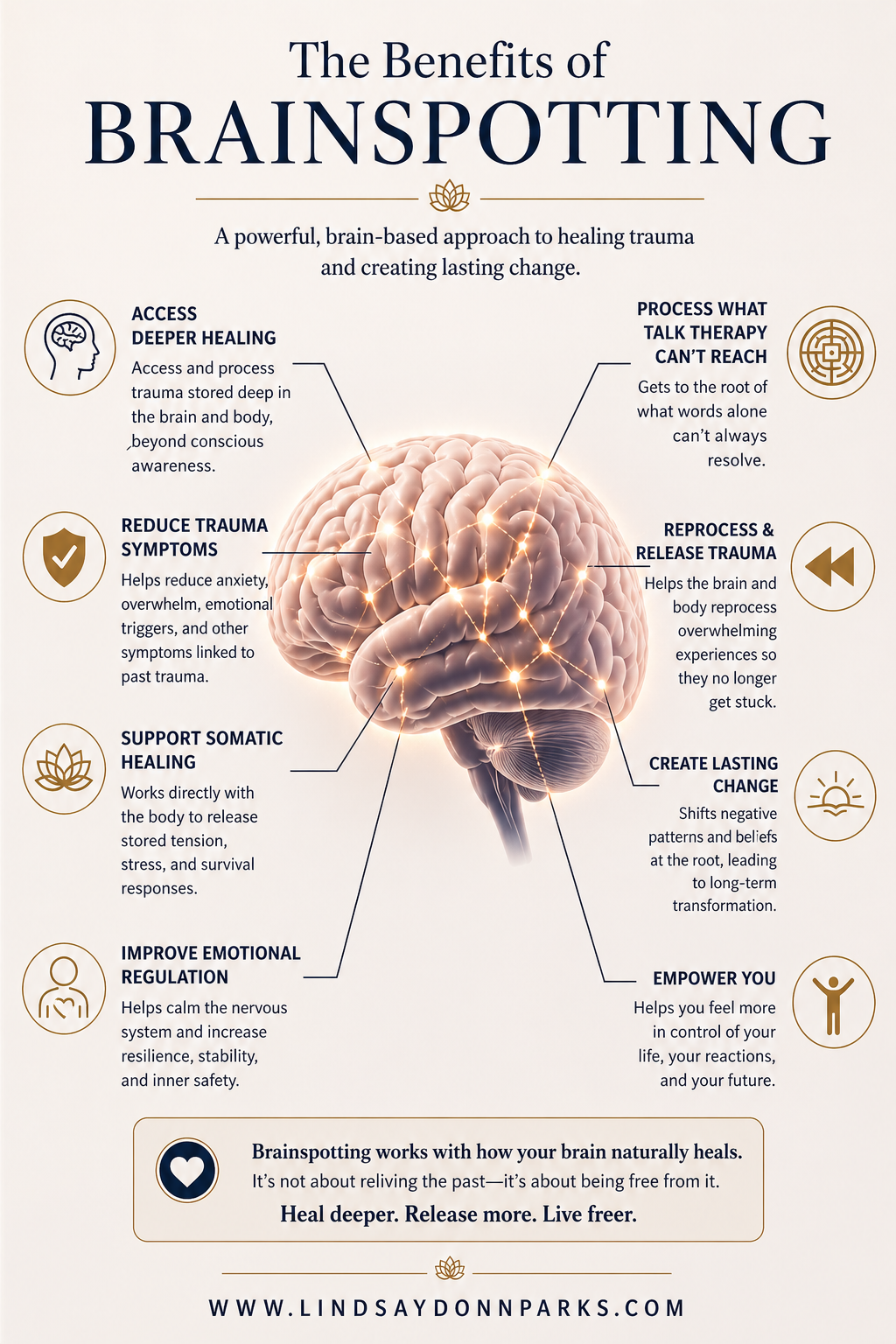
Brainspotting heals trauma by identifying, processing, and releasing core neurophysiological memories stuck in the body, rather than just talking about them. Using the premise that where you look affects how you feel I help you locate eye positions ("brainspots") that correspond with emotional activation, allowing your subcortical brain to reprocess trauma and release trapped energy.
How Brainspotting Works to Heal Trauma: Locating "Brainspots": I guides you to find a specific eye position while focusing on a traumatic memory. This spot is believed to be linked to the area of the brain where that specific trauma is stored.
Subcortical Access: Brainspotting goes deeper than conscious thought, targeting the subcortical brain, responsible for emotion, memory, and bodily regulation, to process, rather than just discuss, trauma.
Somatic Release: The process focuses on physical sensations. By holding the eye position, the nervous system begins to release the "stuck" energy, allowing the trauma to be processed.
Therapist Attunement: I provide a safe, supportive presence (attunement) that allows you to navigate and heal intense emotions.
Bilateral Stimulation: Sometimes used in conjunction with bilateral sound (alternating music), this technique helps soothe the nervous system and facilitates deeper processing.
Why Brainspotting is Effective for Trauma: Addresses Underlying Issues: Unlike some forms of talk therapy, Brainspotting accesses parts of the brain that may not be reached through speech alone.
Reduces PTSD Symptoms: Research suggests that Brainspotting can significantly reduce PTSD symptoms, with some studies showing a 40-50% reduction within a few sessions.
Rapid Results: Many individuals experience improvement after just one or a few sessions, making it a faster alternative to traditional therapy.
Versatility: Beyond trauma, it is used for anxiety, depression, chronic pain, and addiction.
Brainspotting is a highly focused, somatic approach to trauma recovery, allowing you to process traumatic events without necessarily having to speak about them in detail, thus reducing the risk of re-traumatization.
Single session or packages available
QUANTUM TIMELINE THERAPY
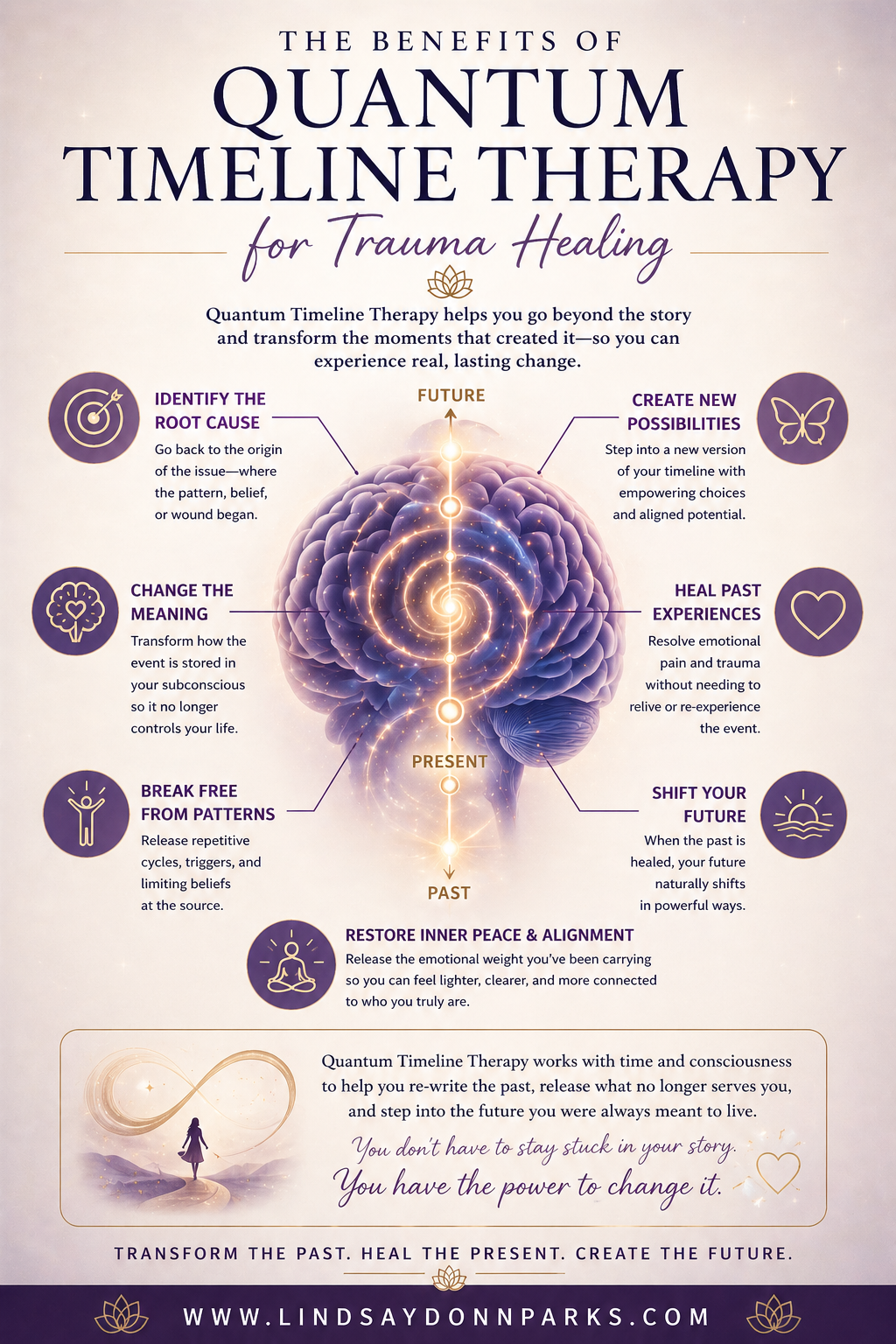
Quantum Timeline Therapy helps with CPTSD by allowing individuals to access their subconscious to release negative emotions (like rage, sadness, or fear) and eliminate limiting beliefs stemming from past trauma. By visualizing a timeline, clients can reframe memories, reducing the intensity of flashbacks and transforming traumatic memories into learning experiences, rather than active triggers.
Key Ways Quantum Timeline Therapy Helps CPTSD:
Releasing Negative Emotions: TLT techniques are designed to let go of "stuck" emotions from past traumatic events without needing to re-live them in detail.
Eliminating Limiting Beliefs: It helps identify and remove negative self-beliefs formed during trauma (e.g., "I am unworthy" or "I am unsafe").
Resolving Emotional Triggers: By addressing the root cause on the timeline, clients often experience fewer inappropriate emotional reactions to present-day triggers.
Creating Personal Empowerment: The process helps shift perspective from being a victim of the past to creating a more positive, empowered future.
Rewiring the Subconscious Mind: It works directly with the subconscious to change how memories are stored, diminishing their power to cause flashbacks.
This is sold as a package of 5 sessions only
HYPNOTHERAPY
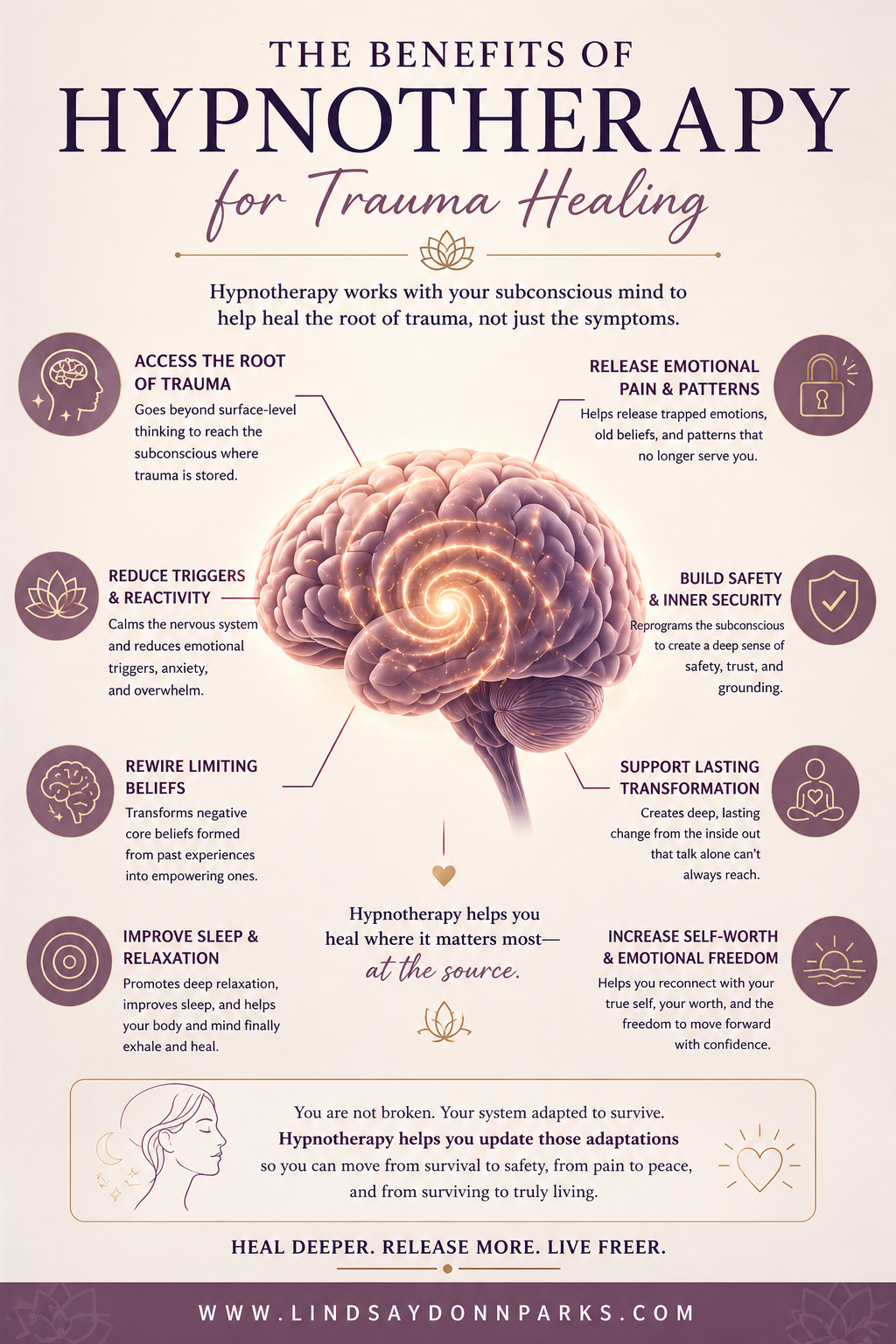
Hypnosis helps with trauma by guiding individuals into a deeply relaxed, focused state, allowing them to process painful memories and emotions without becoming overwhelmed. It helps rewire subconscious responses to triggers, reducing anxiety, flashbacks, and PTSD symptoms while promoting a sense of safety and control.
Hypnosis can also be used for specific desires like smoking cessation and weight loss.
How Hypnotherapy Aids Trauma Recovery Safe Memory Access: Hypnosis provides a controlled, safe environment to address traumatic memories that are often stored in the subconscious.
Reframing Memories: It enables individuals to revisit traumatic events as observers, allowing them to reframe memories and change distorted beliefs associated with the trauma.
Reducing Physiological Reactivity: Hypnosis helps reduce the body's stress responses, such as calming hypervigilance and reducing nightmares or sleeplessness.
Building Coping Skills: Therapists use hypnosis to help patients develop grounding techniques, ego strengthening, and coping mechanisms to handle triggers.
Breaking Negative Thought Cycles: It helps shift focus from negative self-talk and fear-based thinking to positive, empowering perspectives.
Single session or packages available